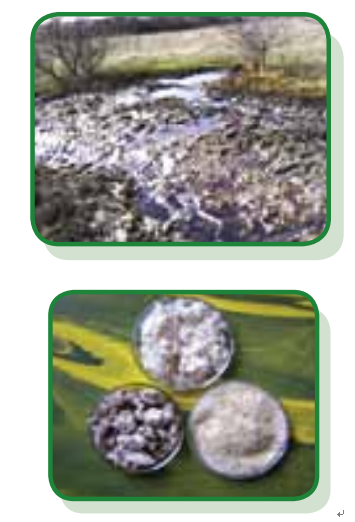
The sorbent preparation methods have been developed for purification of waters and soils from contamination with oil products and organic solvents. Such sorption materials are based on plant polymers, namely, cellulose, lignin, and waste wood (sawdust and coniferous wood greenery). Owing to the chemical effect of the environmentally-friendly components, the sorbents selectively absorb oil, petroleum products and organic nonpolar solvents from water surface. The sorbed oil products are easily collected by mechanical means and can be regenerated or recycled.
DESCRIPTION
The sorbents have fibrous or granular structure, are hydrophobic, have a sorption capacity of 3–8 g/g, and a shelf life of 5 years at least.
MAJOR ADVANTAGES
The sorbents are based on renewable raw materials; they can be recycled and used as a fuel; a feasible and simple technology.
FIELDS OF APPLICATION
Breakdown and accident elimination; collection of oil spills, oils and organic liquids used in industry; collection of oils, petrol, paint and solvent spills in households.
PRODUCT CONSUMERS
Oil industry, gas stations, boiler rooms, fuel stations, and chemical industry.