
Basic Research--Higher Education Center of Chemical Physics and Mesoscopy at Presidium of Udmurt Scientifc Center, Ural Division, Russian Academy of Sciences, together with Izhevsk State Technical University and OAO Izhevsk Electromekhanicheskii Zavod – KUPOL (Izhevsk Electromechanical Plant) of the concern PVO ALMAZ ANTEY have developed fne dispersion suspensions (FDS), which are the components of concrete, gypsum and silicate compositions stable in water and aqueous solutions, as well as in organic media, for uniform distribution of nanostruc-tures in very small quantities (0.01–0.0001%). When introduced in construction materials compositions, in epoxy-based polymeric compositions, compositions based on polyvinylchloride, polyvinylacetate, polycarbonate and phenolic-elastomer compounds, the FDS lead to a considerable improvement of their characteristics, in certain cases, twice as good.
The distinctive feature of FDS metal-containing nanostructures consists in an increase in their activity during interaction with dispersion media having complexons or complexons’ fragments. When selecting the suitable “dispersion medium - nanostructure” pairs, proximity of the oscillation frequencies of metal-containing nanostructure fragments and the dispersion medium molecules has been taken into account. The compositions and concentrations of stable FDS have been found during computational experiments and investigation of the nanostructure sorption of various substances, including surface active substances. FDS stability increases with the decrease in C-CP-MNS concentration (from 3 to 0.001%).
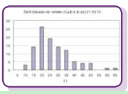
Fig. 1. The distribution of Cu/C nanocomposite particles on size in fine dispersion water suspension.
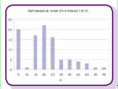
Fig. 2. The distribution of Fe/C nanocomposites particles on size in fine dispersion alcohol-water suspension.