
Obtaining permolecular silica structures is highly topical in view of their use in the synthesis of optical photonic crystals and owing to their possible application in the creation of a wide variety of nanostructured materials. The Institute of Geology has developed an improved method for controllable synthesis of spherical silica particles, which makes it possible to obtain equigranular particles of a specifed diameter in a wide range of sizes (150—750 nm). A model has been suggested for silicon particles deposition in a three-dimensional structure, which considerably reduces the number of stacking faults in the structure.
The method developed for obtaining the spherical silica particles is based on the known method of hydrolysis of tetraethoxylane. Novelty of the proposed method consists in the specifc preparation of the components prior to the synthesis process, in the ratio of the components, and in the temperature of the synthesis process. The proposed setup for the particles deposition equipment is based on the acoustic radiation effect on the permolecular structure formed, which makes it possible to obtain samples of 1x1x1 cm in size. The permolecular silica particles can be used in a variety of applications in optics and electronics aimed at the creation of advanced composite materials and optical photonic crystals.
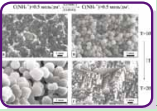
Fig. 1. Shape of silica particles depending on synthesis conditions.
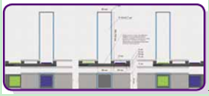
Fig. 2. Equipment setup for deposition of silica particles into a permolecular structure.